
Stay On Your Own Two Feet With Balance Training 

Stay On Your Own Two Feet with Balance Training

As we get older, balance starts to falter. And “older” is starting at age 40!  Movements once easy can become wobbly or, if you’re  anxious that a slip might cause injury. Many begin limiting activity altogether, scared of falling. But giving up favorite hobbies early sacrifices joy – and leads to muscle loss that actually worsens stability further!

Maintaining And Regaining Equilibrium Protects Your Independence

The good news? Custom balance training reverses the steady decline, safeguarding later years. Our compassionate team of Physical Therapists will  assess your needs as part of an evaluation. We can then develop programs using simple exercises that rapidly rebuild foundational reflexes. Soon you’ll walk tall, steady yourself easily if bumped, and feel confidence to continue treasured activities without fear of falling.

It All Starts with Body Awareness
The first step is tuning into your body’s center of gravity and understanding good alignment. Small adjustments in posture and pelvic positioning truly impact overall stability! Targeted stretches open tight spots that restrict range of motion and throw you off-kilter. Don’t underestimate how touchy toes or tight hips undermine your foundation.

Next we progress into balance challenges like standing on one foot, controlled reaches outside your base of support, or dynamic sequences coordinating movement. It’s about rewiring subconscious responses. With individual coaching, these fundamentals transform equilibrium rapidly.

Ongoing Assessments Guide Your Custom Program
We also utilize advanced balance testing to pinpoint exactly where your deficits lie. An inner ear disorder differs greatly from general muscle weakness, requiring a tailored correction plan. These insights allow us to continually adjust your regimen so you see ongoing adaptation and success. No plateau in sight!

The Benefits Go Beyond Staying Upright

Rebooting your stability through movement can also help in other ways:

  • Fends off mood dips and cognitive decline
  • Alleviates joint strains that cause pain
  • Boosts circulation lowering blood pressure
  • Maintains independence for everyday life

Our small group classes provide community and accountability too. Sharing the journey with a group makes the commitment fun!As physical therapists, pilates instructors and wellness advocates, we’re here for you. If you want to attend a balance class with a friend, parent or neighbor, we can work with you to ensure that class is a good balance (pun intended!) to help you get the most of your classes.


Should We all Be Walking Backwards?

Here at MindBody Physical Therapy & Wellness, we’re always looking for innovative ways to help our clients regain mobility and improve their overall health. Recently, we came across an interesting Wall Street Journal article about the potential benefits of walking backwards.

According to the WSJ article, walking backwards can strengthen muscles that aren’t worked as much by regular forward walking. By challenging our balance and coordination in a new way, backwards walking may also help prevent falls as we age.

There are upsides to this exercise and our team uses this exercise and incorporates into some client treatment plans. We guide clients through short bouts of backwards walking, making sure they feel steady and secure. The challenge is doing this in a way this is safe and right for you.

We don’t expect backwards walking to fully replace regular walking – forwards is still the best way to efficiently get from point A to B! But mixing in some backwards intervals can help provide a useful strength and balance boost. To learn more about the potential benefits of backwards walking, check out the full WSJ article here.

Find Lasting Relief from Back Pain with Physical Therapy

If you’re one of the millions of people suffering from back pain, take heart – physical therapy can help in multiple proven ways. At our clinic, experienced physical therapists create customized treatment plans that reduce pain and restore normal function over time.

The four cornerstones of our back pain recovery programs are:

• Targeted strengthening exercises  

• Flexibility training

• Postural correction

• Hands-on manual therapy

Strengthen With Exercises
A common source of back pain is poor strength and endurance in the intricate web of muscles supporting the spine. Their fatigue leads to poor posture, strained joints, compressed nerves and more. 

Your physical therapist will prescribe targeted exercises strengthening these essential yet overlooked areas. Things like bridges, bird dogs, planks and rows shore up your core and back. As these foundational muscles grow stronger, they better uphold proper spinal alignment and absorb impacts.

Flexibility Exercises
Another important aspect of physical therapy for back pain is flexibility. Tight muscles can contribute to back pain, so stretching those muscles regularly can help alleviate your pain. Your physical therapist can show you some stretches that are specific to your condition and help you increase your overall flexibility.

Restricted flexibility from tight muscles also disrupts posture and strains the back. Your PT will identify inflexible areas using assessments then show you stretches bringing length back. 

For example, opening up hamstrings, hip flexors and quadriceps through consistent stretching alleviates pull on the pelvis that twists the spine. Restoring flexibility minimizes back hyper mobility and irritation.

Posture Correction
Poor posture is a common cause of back pain, and it’s becoming even more prevalent with the work from home trend. Sitting at a desk all day can wreak havoc on your back and neck if you’re not sitting with proper posture.

Slouching over phones and laptops or sitting all day. These misalignments overload the spine’s shock absorption capabilities. Your PT helps identify personal postural issues then trains optimal positioning.

Simple tweaks like retracting your shoulders, lifting your chest and tucking your pelvis prevent the spine-compressing sway. Re train your brain.  

Your physical therapist can help you identify any postural issues and show you exercises and stretches to correct them. They may also recommend ergonomic adjustments to your workspace to reduce the strain on your back.

Manual Therapy
Finally, manual therapy can be an incredibly effective way to treat back pain. Manual therapy techniques involve hands-on manipulation of your muscles, joints, and soft tissues to help relieve pain and improve mobility.

Hands-on techniques like massage, trigger point release and joint mobilization directly attack back pain sources. Your PT manually targets irritated nerves, adhesive muscle knots and stiff joints contributing to discomfort.

This myofascial and muscular manipulation increases blood flow, reduces buildups and loosens tissues. Combining this manual therapy with the training above provides well-rounded pain relief.

Get Back to Basics with MindBody PT
At MindBody Physical Therapy, we believe in taking a holistic approach to treating back pain. That’s why we offer a variety of different treatments and therapies to help our patients find relief. Whether you’re dealing with chronic back pain or just a nagging ache, we can create a personalized treatment plan to help you get back to your normal daily activities.

In addition to the four techniques listed above, we also offer other modalities such as ultrasound, heat and cold therapy. We believe that every patient is unique, so we work closely with each individual to create a customized treatment plan that meets their specific needs. And, we have our therapists work one-on-one – for the entire time you’re with us.

If you’re struggling with back pain we can help find relief and get back to the activities you love. Contact us today to schedule an evaluation with one of our experienced physical therapists. We’re here to help you feel your best!


I

Neck Pain, Back Pain: Tech Neck Is Real

Do You Have Tech Neck? How to Find Relief

Working from home, mobile phones, laptops. All creating a mobile workforce and a generation of kids with Tech Neck. If you’re like most people these days, you probably spend a significant amount of time hunched over your computer, phone, or tablet screen for work or leisure. This posture, nicknamed “tech neck,” can take a real toll. When your head is angled forward, it puts strain on your neck and back muscles and can lead to pain, spasms, and even early wear and tear on spinal disks over time. We see the way tech neck can lead to additional problems. 


Your Head Weighs As Much As a Bowling Ball


The problem is only intensified when you consider that the average adult head weighs 10 to 12 pounds. Bend your neck forward just 15 degrees for prolonged periods and the effective weight feels closer to 27 pounds. Bend it forward 60 degrees to gaze down at your phone and it’s like carrying a 60-pound bowling ball around your neck all day long! No wonder so many of us have nagging neck soreness and stiffness.


Fortunately, with some awareness and proactive steps, you can find tech neck relief. We have a few quick and easy stretch recommendations that can counteract tech neck. For example:

  • Slowly tilt your head side to side, toward each shoulder, feeling the stretch up the opposite side of the neck. Repeat 5 times per side.

  • Gently tilt your head forward, trying to touch chin down towards chest, then tilt head back as far as comfortable. Repeat 5 times.


Check out the full list of 6 recommended stretches in this article [link to Washington Post article]. Performing these simple stretches just a few minutes per day can provide some blessed tech neck relief.


For lasting results, be sure you also reevaluate your workstation setup, posture habits, and screen time. Consider investing in professional advice from a physical therapist or ergonomics consultant too. Just like other body parts, our neck health requires some ongoing maintenance to withstand modern life’s demands. But with a little diligence to break up stationary screen gazing and loosening those tense muscles, you can stay comfortable even in our tech-centric world.

So what can you do? We recommend a series of stretches. Want to fix the problem? A combination of physical therapy, tech set up at home and discipline can help mitigate the problem. Our team is here for you. And your children! Article from the Washington Post HERE.

Chest Opener Stretch Video

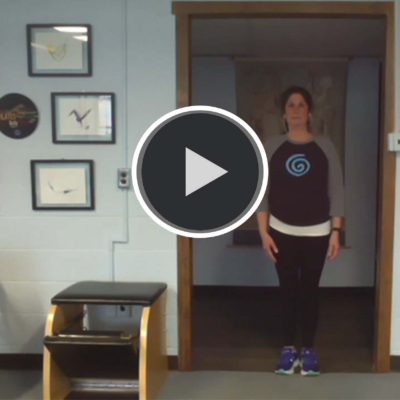
Click the video below to see a short clip of Wendy demonstrating the Chest Opener Stretch exercise, a great stretch to practice during the day. 

Follow Wendy each weekday on Zoom for her 15-minute stretch session. The class is free for Mind Body members and runs Monday through Friday. The forum opens at Noon and class starts promptly at 12:10pm. Call the office to get more information about the lunchtime stretch sessions and pilates mat classes we’re now offering virtually on Zoom! (443) 279-1777

[evp_embed_video url="https://mindbodypt.com/wp-content/uploads/2020/05/ChestOpener_480.mov"]

Arm Nerve Glide Exercise

Working at home has been a BIG change for many of us. Break up your work day with our lunch time stretch session! The 15-minute break will help to stretch those “staring at the computer for a meeting” muscles.  It will help to energize you for the remainder of your day.

Our stretch session runs Monday through Friday from 12:00p-12:30p. The forum opens at Noon and we start promptly at 12:10p, so if you have to jump on a 12:30p call, you’ll be refreshed and ready to go! Click the video below to see a short clip of Wendy demonstrating the arm nerve glide exercise, a great stretch to practice during the day. Call the office to get more information about the lunchtime stretch sessions and pilates mat classes we’re now offering virtually on Zoom! (443) 279-1777

[evp_embed_video url="https://mindbodypt.com/wp-content/uploads/2020/04/Arm-Nerve-Glide.mov"]